The Summer Cardio Trap: Why "Burning Off" Your Food Doesn't Work (And What to Do Instead)

By: The InMotion Team

Happy July! Summer is officially in full swing here in Shrewsbury. Between backyard Fourth of July barbecues, local ice cream runs, and weekend trips, our schedules—and our diets—look a little different this time of year.

And with that comes a very common psychological trap. You enjoy a few burgers or a drink by the water over the weekend, and on Monday morning, you wake up feeling guilty. Your immediate instinct is to rush to the gym, hop on a treadmill, and stare at the "calories burned" monitor until you've "punished" yourself enough to make up for it.

At InMotion Personal Training, we want to help you break free from this exhausting cycle.

Looking at exercise as a punishment for what you ate is not only mentally draining, but it's also scientifically flawed. You cannot out-exercise a bad diet. Instead of using cardio to chase a temporary calorie burn, the real secret to a high-functioning summer metabolism is building Functional Muscle.

The Math Problem with Cardio

The human body is an incredibly adaptive machine. When you do endless amounts of steady-state cardio to burn off food, your body eventually figures out how to become more efficient. It learns to burn fewer calories to do the same amount of work.

Even worse, if you are constantly in a high-stress cardio state without building strength, your body can begin to break down lean muscle tissue for fuel. Less muscle means a slower resting metabolic rate. You are essentially shrinking your body's internal engine.

Muscle: Your 24/7 Metabolic Engine

Think of lean muscle mass as a "401k for your metabolism."

Fat tissue is metabolically lazy; it requires almost no energy for your body to maintain. Muscle tissue, on the other hand, is incredibly expensive for your body to keep alive. Even when you are sitting on the couch, sleeping, or working at your desk, a body with more lean muscle is actively burning more calories every single minute of the day.

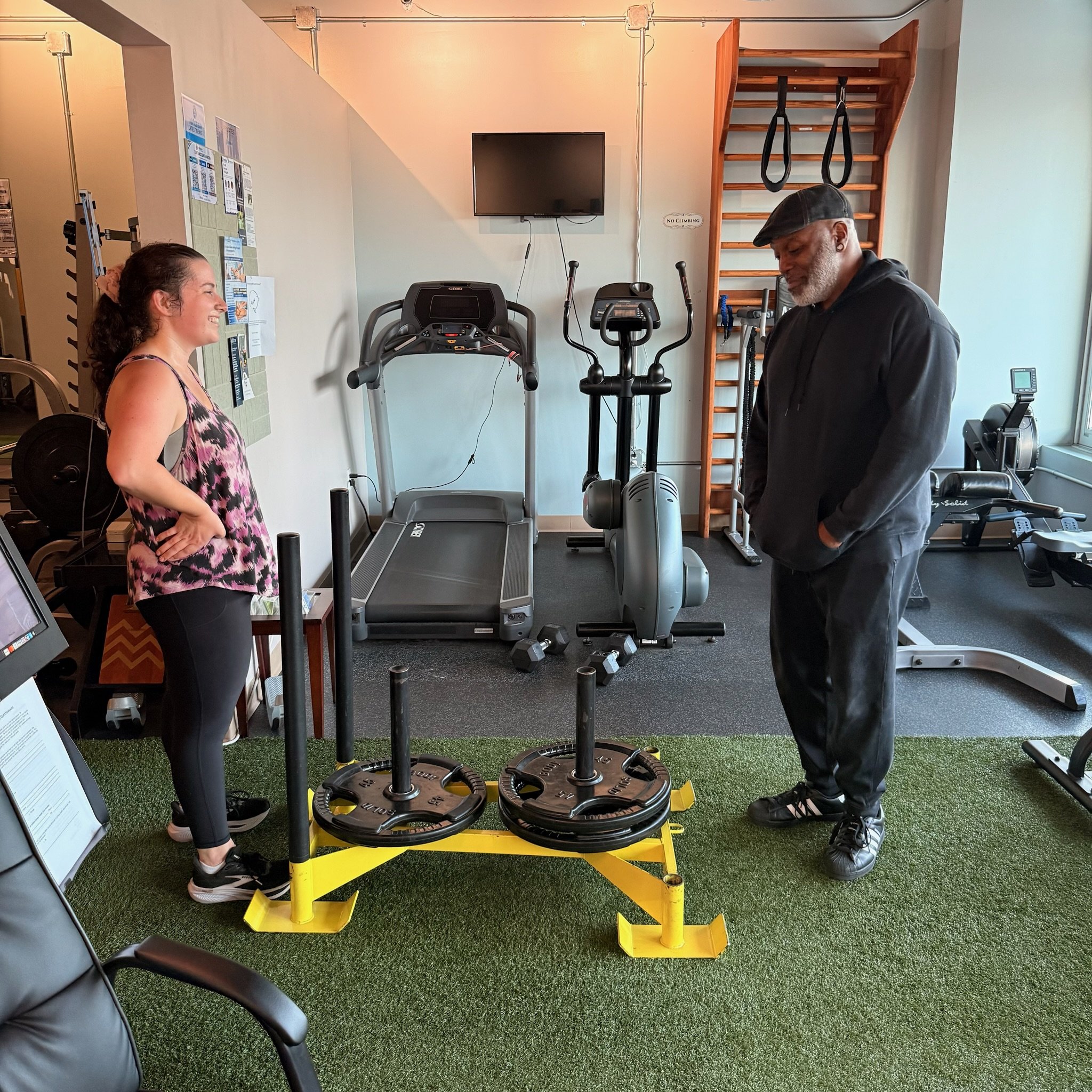
When we focus on Functional Movement—like heavy carries, squats, and proper resistance training at our Maple Ave studio—we aren't just burning calories during the 45 minutes you are with us. We are tearing down and rebuilding your muscle tissue so that your metabolism runs hotter for the next 24 to 48 hours.

Shift Your Mindset This July

Don't let fitness become a punishment this summer. Eat the food, enjoy your family, and experience your life. When you step into InMotion, leave the guilt at the door. We aren't here to sweat away a weekend; we are here to build a stronger, more capable structural foundation that serves your metabolism all year long.

Ready to stop chasing the treadmill and start building an engine? Click below to book a complimentary Discovery Consultation at InMotion today, and let's build a strength protocol designed for your specific goals.

Beyond the Water Bottle: The Real Science of Summer Hydration and Preventing Muscle Cramps

By: The InMotion Team

We’ve officially hit the hot summer months here in Shrewsbury, and if you’ve spent any time exercising outdoors or pushing through a heavy session at our Maple Ave studio lately, you know how quickly the heat can sap your energy.

Along with the summer heat comes a classic physical frustration: the dreaded muscle cramp.

Whether it hits you mid-stride during a jog or wakes you up in the middle of the night, a muscle cramp is a painful reminder that your body is out of balance. The traditional advice we’ve all heard is simple: "Just drink more water." But at InMotion Personal Training, we look at the body through the lens of functional science. The truth is, chugging plain water when you’re already cramping won't solve the problem—and in some cases, it can actually make it worse. Here is the real science of hydration and how to protect your muscles this summer.

The Electrolyte Delusion

Your muscles rely on electrical signals from your nervous system to contract and relax smoothly. For those signals to travel cleanly, your body needs a precise balance of water and minerals known as electrolytes (specifically sodium, potassium, and magnesium).

When you sweat, you don't just lose water; you lose a massive amount of sodium. If you replace that sweat by chugging gallons of plain, filtered water, you actually dilute the remaining minerals left in your bloodstream. This condition (called hyponatremia) causes your nervous system to misfire, sending your muscles into a hyper-irritable state.

In short: Dehydration isn't just a lack of water; it’s a lack of mineral balance.

Cellular Hydration and Movement

True hydration means getting water inside your muscle cells, not just sloshing around in your stomach. Your fascial system—the continuous web of connective tissue wrapping around your muscles—acts like a sponge. When you are chronically tight or performing repetitive movements without proper mobility work, that "sponge" gets squeezed dry and compressed, blocking optimal fluid flow.

To stay properly hydrated and cramp-free this summer, you need to address both the internal chemistry and the external movement.

The InMotion Summer Hydration Protocol

  • Pre-Hydrate with Minerals: Don't wait until your workout starts to think about fluids. Mix a high-quality electrolyte powder (look for one with zero sugar and at least 500mg of sodium) into your water 30 minutes beforeyou train or head outdoors.

  • Hydrate the Tissue (Foam Rolling): Before you exercise, spend two minutes foam rolling your calves, hamstrings, and quads. This acts like manual irrigation, breaking up tissue restrictions and allowing fresh, mineral-rich blood and water to saturate the muscle fibers.

  • Listen to the Neurological Warning Signs: Minor muscle twitches, sudden fatigue, or a slight headache are your body’s early warning signals that your nervous system is running out of mineral fuel. Don't wait for a full-blown cramp to pause and replenish.

Move Better, Feel Better

Your body is an interconnected machine. By pairing smart nutritional habits with the expert-led Functional Movementprotocols we practice at InMotion, you can completely bypass the typical summer setbacks that keep people sidelined.

Want to optimize your recovery and performance metrics this summer? Let our team help you build a comprehensive blueprint for your health. Click below to book a complimentary Discovery Consultation at our private Shrewsbury studio today.

The 60-Minute Myth: How to Keep Your Fitness Progress When Summer Gets Busy

By: The InMotion Team

We are officially in mid-June, and the summer scramble has arrived in Shrewsbury. Between backyard graduation parties, kids' sports tournaments, packing for weekend trips, and trying to enjoy the warm weather, your calendar is packed.

When time gets tight, the very first thing people tend to drop from their schedule is their fitness routine. The logic usually goes something like this: "If I don’t have a full hour to commit to a grueling workout today, it’s not even worth going."

At InMotion Personal Training, we want to let you in on a secret that will save your progress this summer: The mandatory 60-minute workout is a myth.

You do not need to live in the gym to maintain your strength, protect your joints, and feel great. In fact, when you switch from generic exercise to intentional Functional Movement, you can get an incredibly high-yield, effective training session done in just 25 to 30 minutes. Here is how to master "Movement Efficiency" when life gets hectic.

Quality Over Chronology

Your body’s nervous system and muscles don't possess a clock; they respond to stimulus and tension.

Think about how most people spend an hour at a traditional commercial gym: five minutes looking for a parking spot, ten minutes wandering between machines, five minutes scrolling on their phone between sets, and a few minutes chatting. Out of that 60-minute window, only about 15 to 20 minutes consist of actual, focused physical effort.

By cutting out the fluff and focusing on compound, multi-joint movements, you can trigger a massive metabolic and neurological adaptation in half the time.

The "High-Yield" Strategy: Compound Overload

If you only have 20 or 30 minutes to train at home or drop into our Maple Ave studio, your strategy should focus on movements that use multiple muscle groups simultaneously. We call these the "Big Rock" functional patterns:

  1. A Push: (e.g., A controlled push-up or overhead press)

  2. A Pull: (e.g., A single-arm dumbbell row to protect your posture)

  3. A Hinge: (e.g., A kettlebell deadlift to fire up your glutes and hamstrings)

  4. A Squat: (e.g., A goblet squat to build core and leg power)

By pairing a push and a hinge together, or a squat and a pull together in a continuous circuit, your heart rate stays elevated, your muscles are challenged, and you pack an hour's worth of structural benefits into a tight, hyper-efficient window.

Consistency Trumps Intensity

An elite 25-minute session that you actually do twice a week during June and July will completely outperform a perfect 60-minute routine that you skip because you’re too busy.

Fitness isn't an all-or-nothing game. This summer, give yourself permission to drop the pressure of the hour-long workout. Focus on moving with perfect form, making every rep count, and keeping your body in motion.

Don't have time to map out an efficient routine on your own? Let us handle the programming so you can just show up and execute. Click below to book a complimentary Discovery Consultation at InMotion, and let's design a high-efficiency summer movement blueprint tailored to your exact schedule.

Why Your Pre-Workout Stretch is Actually Making You Weaker (And What to Do Instead)

By: The InMotion Team

Picture this: You’re getting ready to head out for a run down toward the Lake Quinsigamond trails, jump into a local pickup soccer game, or head into a heavy lifting session at our Maple Ave studio. Before you start, you drop down, grab your toes, and hold a hamstring stretch for 30 seconds.

You feel ready to go, right?

Actually, according to modern movement science, you just primed your body for an injury and temporarily decreased your athletic power.

At InMotion Personal Training, we see this mistake all the time. For decades, we were taught that static stretching(holding a deep stretch while sitting or standing still) before exercise was the gold standard for preventing injury. Today, we know the exact opposite is true. Here is the science behind why you need to drop the static stretches, and the 5-minute Functional Movement protocol you should be doing instead.

The Problem with Cold Rubber Bands

Think of your muscles like a bundle of rubber bands. If you take a cold rubber band out of the freezer and immediately try to pull it as far as it can go, it doesn't get more flexible—it snaps or micro-tears.

Static stretching before your muscles are warm forces them into long, passive ranges of motion while they are completely cold. Even worse, holding a static stretch actually "turns off" the nervous system communication to that muscle, decreasing your explosive power and stability right when you need it most.

Shift to the Dynamic Standard

To prepare your body for movement, you need a Dynamic Warm-Up. Instead of holding a stretch, you move through a controlled range of motion continuously. This elevates your core body temperature, lubricates your joints with synovial fluid, and "wakes up" the neural pathways between your brain and your muscles.

The 5-Minute InMotion Dynamic Protocol

Before your next workout or outdoor summer activity in Shrewsbury, run through 10 repetitions of each of these functional patterns:

  • The Inverted Hamstring Stretch (Balance & Posterior Chain): Stand on one leg, hinge at your hips, and let your back leg float straight up behind you while keeping your spine straight. Return to standing. This activates the hamstrings and core while firing up your foot stability.

  • The World’s Greatest Stretch (Hip & Thoracic Mobility): Step back into a deep lunge with your right foot. Place your hands on the floor inside your left foot. Reach your left hand up toward the ceiling, rotating your mid-back. Step back up and alternate.

  • The Lateral Cosack Squat (Side-to-Side Matrix): Stand with a very wide stance. Keep your right leg perfectly straight while bending your left knee and sinking your hips down and back. Push through your left heel to return to the center and switch sides. This prepares your adductors and hips for lateral movement.

Train Smart This Summer

Investing just five minutes into moving dynamically before you place a high demand on your body is the ultimate insurance policy against pulled muscles, back tweaks, and joint pain.

Want to learn a warm-up protocol customized exactly to your structural baselines? Stop guessing with your fitness. Click below to book a complimentary Discovery Consultation at InMotion today, and let's optimize how you move.

Rewiring the Brain-Body Connection: The Science Behind Our NeuroMotion Class

By: The InMotion Team

When dealing with a neurodegenerative condition—such as Parkinson’s disease, Alzheimer’s, Multiple Sclerosis (MS), or the aftermath of a stroke—traditional fitness advice falls short. Generic gym machines and standard cardio routines don't address the unique ways these conditions disrupt the nervous system.

At InMotion Personal Training, we believe that exercise shouldn't just target your muscles; it should target your brain.

That is why we are incredibly proud to introduce NeuroMotion, a specialized Functional Movement class at our Shrewsbury studio designed to help individuals reclaim their mobility, protect their autonomy, and fight back against symptom progression.

The Power of Neuroplasticity

For a long time, medical science believed that once neural pathways were damaged, they were gone for good. Today, we know about a beautiful phenomenon called neuroplasticity—the brain’s natural ability to reorganize itself, adapt, and forge entirely new pathways around damaged areas.

Neuroplasticity doesn't just happen on its own; it requires a specific, intentional physical stimulus. NeuroMotion is built entirely around providing that stimulus. We don't just ask you to move; we ask your brain and body to communicate in entirely new ways.

Inside a NeuroMotion Session

Led by our degree-holding movement specialists at our private Maple Ave studio, every NeuroMotion class targets three critical areas of neurological health:

  • 1. Re-establishing Gait & Balance: Conditions like Parkinson's can cause a "freezing" sensation or a shortened, shuffling stride. We use deliberate footwork drills and dynamic balance training to re-wire foot-to-brain communication, giving you the stability needed to walk with confidence and drastically lower fall risks.

  • 2. Cognitive-Motor Integration (Dual-Tasking): In daily life, you rarely just walk; you walk while carrying a conversation, turning your head, or holding a cup of coffee. Our sessions utilize dual-task drills—like catching a light ball while maintaining a specific stepping pattern—to strengthen the brain's ability to coordinate thought and physical action simultaneously.

  • 3. Amplified Movement Patterns: Neurological challenges often cause movements to become "small" and rigid. We counteract this by practicing large-amplitude movements—big rotational reaches, wide steps, and controlled power work—to open up the joints, defeat muscle tightness, and restore your natural physical presence.

A Safe, Expert-Led Community

We know that stepping into a fitness environment with a neurological diagnosis can feel intimidating. That is why NeuroMotion is kept to strict, small-group numbers in a supportive, private setting. You aren't getting a weekend-certified instructor; you are getting an expert coach who understands how to safely modify every single repetition for your specific baseline.

Your movement journey is far from over. Whether you are looking to maintain your independence, complement your current clinical physical therapy, or help a loved one stay active, NeuroMotion is here to guide the way.

Note: To ensure the ultimate safety and success of every participant, a private, 1-on-1 Neuro-Functional Assessment is required prior to joining your first class.

Staff Spotlight: Why Education and Quality Matter in Functional Movement

By: The InMotion Team

When you walk into a typical big-box gym, the person handed your file might have gotten their training certificate over a single weekend online.

At InMotion Personal Training, we operate differently. We believe that your body deserves expert-level care. That’s why our Shrewsbury coaching staff is comprised of dedicated professionals who understand biomechanics, corrective exercise, and the deep science of Functional Movement.

Today, we are sitting down with one of our featured coaches, Toan Le, to discuss his philosophy on coaching and how he helps clients achieve long-term success at our Maple Ave studio.

Meet Toan Le, Movement Specialist

Q: InMotion focuses heavily on Functional Movement. What does that mean to you?

Toan: "Functional movement means moving better in ways that directly translate to everyday life. It’s about improving how your body moves so daily activities feel easier, more efficient, and pain-free. When you move better, you feel better, and that can have a positive impact on your overall quality of life."

Q: What is your favorite type of client to work with in the studio?

Toan: "My favorite clients to work with are those who come in with a positive attitude and are motivated to put in the work needed to improve their health and quality of life. Seeing someone stay committed to their goals and make progress is one of the most rewarding parts of coaching."

Q: What is one piece of advice you find yourself giving out the most?

Toan: "One piece of advice I give often is to avoid rushing the process. Take things one step at a time and focus on doing movements correctly. Quality always beats quantity, and taking a gradual approach helps prevent injuries while building a stronger foundation for long-term success."

Experience the InMotion Difference

Our trainers aren't just rep-counters; they are partners in your health journey. Whether you work with Toan or anyone else on our expert team, you are getting a customized blueprint designed specifically for your body.

Ready to train with Toan and the rest of Shrewsbury's finest? Click below to book your complimentary Discovery Consultation and meet our coaching staff in person.

The Vacation Blueprint: How to Maintain Your Mobility and Progress on the Road

By: The InMotion Team

It’s late May, summer vacation planning is underway in Shrewsbury, and the countdown to travel has officially begun.

Whether you’re heading down to the Cape, flying across the country, or just packing up for a long weekend, a common anxiety we hear from clients at InMotion Personal Training is: "Am I going to lose all my progress while I’m away?"

It’s a valid fear. Hours spent cramped in a plane seat or driving down the highway can leave your joints feeling stiff, and interrupting your routine can feel like a setback. But here is the secret: Functional Movement doesn't require a gym.You don’t need a barbell to maintain your foundation. You just need a strategy to keep your joints moving through their proper ranges of motion. Here is your official InMotion Travel Blueprint to stay loose, energized, and pain-free on your summer trip.

1. The "De-Stiff" Travel Day Protocol

Before you even unpack your bags at the hotel, your body absorbs the stress of the travel day. Long periods of sitting cause your glutes to go dormant and your hip flexors to lock up.

  • The Strategy: Every time you stop for gas or clear airport security, take 60 seconds to do 10 Bodyweight Squatsand 5 World’s Greatest Stretches (a deep lunge with a torso rotation). This tells your nervous system to stay awake and prevents that deep, post-travel lower back ache.

2. Focus on "Movement Snacks," Not 60-Minute Workouts

Vacation is for relaxing and creating memories—not stressing over a missed hour-long workout. Instead of trying to find a hotel gym, focus on high-yield, 10-minute "movement snacks" in the morning.

  • The Core & Balance Reset: Spend 5 minutes on the floor of your room doing deadbugs and bird-dogs to keep your core braced. Follow it with 5 minutes of single-leg balance work to keep your joints stable.

  • The Benefit: This small investment keeps your movement quality high so that when you return to our Maple Ave studio, you don't have to spend a week playing catch-up.

3. Use Your Environment

Functional movement is all about adaptation. Take advantage of your vacation setting to move in ways you don't normally do at home.

  • Walk the beach (fantastic for foot and ankle stability).

  • Hike a new trail (great for lateral movement and hip strength).

  • Swim a few laps (excellent, low-impact decompression for your spine).

Enjoy the Trip—We've Got You Covered

Remember, fitness is a lifelong journey of longevity. A week of vacation isn't going to ruin months of hard work if you keep your body in motion. Enjoy the time off, practice your mobility snacks, and we will be ready to ramp things back up the second you get back to Shrewsbury.

Planning a trip soon? Chat with your trainer during your next session, and we will build a custom, 5-minute travel mobility routine tailored specifically to your body's needs.

The Science of Aging Well: Why Functional Movement is the Fountain of Youth

By: The InMotion Team

Aging is inevitable, but "feeling old" doesn't have to be.

At InMotion Personal Training, we work with many clients in the Shrewsbury area who are entering their 60s, 70s, and beyond. Their goal usually isn't to break powerlifting records—it’s to ensure they can stay in their homes, travel the world, and remain physically independent for as long as possible.

The secret to this longevity isn't found in a pill or a generic cardio machine; it’s found in Functional Movement.

Shifting the Focus: From "Cardio" to "Capability"

Many seniors are told to "just go for a walk." While walking is great, it doesn't address the three primary concerns of aging: muscle loss (sarcopenia), bone density decrease, and balance issues.

Our protocol for longevity focuses on building "Functional Reserve." This means we train your body to be stronger than your daily life requires, so that a trip on a curb doesn't lead to a fall, and carrying groceries doesn't lead to a strained back.

The InMotion Longevity Protocol

We tailor our senior programs to three critical pillars:

  • Balance & Proprioception: We use specific drills to "re-wire" the connection between your brain and your feet. This is the single best way to prevent falls and maintain confidence while moving.

  • Joint-Friendly Strength: We use Functional Movement patterns—like the sit-to-stand (squat) and the deadlift (picking up a grandchild)—to build bone density and protect your joints without the high impact of traditional workouts.

  • Mobility for Life: We prioritize the flexibility needed for daily tasks, like reaching into a high cabinet or turning your head easily while driving down Route 9.

Invest in Your Future Self

Think of strength training as a "401k for your body." The movements you practice today at our Maple Ave studio are the reason you'll be able to enjoy your retirement years on your own terms.

It is never too late to start. Whether you’ve been active your whole life or haven't stepped into a gym in decades, our expert trainers provide a private, supportive environment to help you move better and live longer.

Beyond "Getting Your Body Back": Functional Movement for the Modern Mom

To the mothers of Shrewsbury: we see you.

We see you lifting heavy car seats, carrying toddlers on one hip, and spending hours leaning over strollers. While the world often talks about "getting your body back" in terms of aesthetics, at InMotion Personal Training, we want to talk about something more important: Getting your function back.

Motherhood is an athletic event. From pregnancy through the toddler years, your body undergoes massive structural shifts. If you don't address those shifts with Functional Movement, the result is often chronic lower back pain, "mummy tummy" (diastasis recti), and a constant feeling of being drained.

Why "Traditional" Workouts Often Fail Moms

Many moms try to jump back into high-intensity boot camps or heavy lifting too soon. Without a foundation of core stability, these "hard" workouts can actually reinforce bad patterns, leading to pelvic floor issues or shoulder strain.

At InMotion, we don't just give you a "workout." We give you a reclamation plan.

The InMotion "Mom-Strong" Protocol

Our approach to training mothers focuses on the specific demands of your daily life:

  • Core Re-Education: We go beyond crunches. We teach you how to engage your deep transverse abdominals and pelvic floor to support your spine while you’re lifting your kids.

  • Postural Correction: We fix the "rounded shoulder" look caused by nursing and carrying children, opening up your chest and strengthening your mid-back.

  • Functional Energy: We use strength training to stabilize your joints and boost your metabolism, helping you find the energy to keep up with your busy Shrewsbury schedule.

Strength is a Self-Care Priority

We know your time is limited. That’s why our Concierge and Private Studio sessions are designed to be the most efficient hour of your day. Investing in your physical strength isn't selfish—it’s the foundation that allows you to show up for your family with less pain and more energy.

You’ve taken care of everyone else. It’s time to take care of you.

Drive Further, Play Longer: The InMotion Approach to Golf Fitness

Golf season is in full swing here in MetroWest, and we know the feeling: you’re ready to hit the links, but your body isn't quite ready for the torque and rotation of a full swing.

Many golfers make the mistake of thinking golf fitness is just about "getting stronger." But at InMotion Personal Training, we know the truth: Golf is a game of rotation. If your body lacks mobility, your swing is going to compensate—and that compensation is exactly where injuries (and lost yardage) begin.

The "Separation" Factor

The secret to a powerful golf swing is "X-Factor"—the ability to create separation between your upper and lower body. If your thoracic spine (mid-back) is stiff from sitting at a desk, or your hips are tight from your commute, your body will try to force that rotation through your lumbar spine (lower back).

That’s why so many golfers struggle with lower back pain. You aren't "out of shape"; you are out of alignment.

The InMotion Golf Protocol

We don't just put you on a treadmill. Our golf-specific training focuses on three pillars:

  • Mobility First: We open up your hips and mid-back so you can actually reach the positions your swing requires.

  • Rotational Stability: We build the core strength needed to control your swing speed without putting undue stress on your spine.

  • Power Output: We train your glutes and legs to be the "engine" of your swing, so you can stop arm-swinging and start driving the ball with your whole body.

A Longer Season (and a Lower Score)

Whether you’re a scratch golfer looking for that extra 10 yards or someone who just wants to play 18 holes without reaching for the Ibuprofen, our approach to Functional Movement ensures you can enjoy the game for years to come.

Don't let physical limitations dictate your score. Come into our Maple Ave studio for a golf-specific movement assessment, and let’s get you ready for your best round yet.

Beyond the Adjustment: Why Corrective Exercise is the Long-Term Fix for Back Pain

If you live in Shrewsbury, chances are you’ve felt it: that dull ache in your lower back after a long commute on Route 9, or the sharpness that hits when you reach down to pick up a golf bag.

For many, the first instinct is to "crack" it or wait for it to go away. But at InMotion Personal Training, we look at back pain through the lens of Corrective Exercise. We don't just want to mask the pain; we want to re-train your body to move so the pain never comes back.

The "Desk Jockey" Syndrome

Most back pain isn't caused by a single injury. It’s caused by "micro-trauma"—the result of sitting for 8+ hours a day. This leads to what we call Reciprocal Inhibition: your hip flexors get tight, your glutes "turn off," and your lower back takes the brunt of the work.

Our approach to Lifestyle Medicine starts with identifying these imbalances before we ever put a barbell in your hands.

How We Fix It: The InMotion Protocol

When you walk into our Maple Ave studio with back pain, our degree-holding trainers follow a specific three-step corrective process:

  1. Inhibition: We use specialized techniques (like foam rolling or PNF stretching) to "quiet down" the overactive muscles that are pulling your spine out of alignment.

  2. Activation: We "wake up" the muscles that have gone dormant—specifically your deep core and glutes—so they can start supporting your frame again.

  3. Integration: We teach your body how to use those muscles together in functional movements (squatting, lunging, reaching) so you can move through your day in Shrewsbury pain-free.

It’s Not Just Training—It’s Longevity

This is the heart of Functional Movement. By fixing your movement patterns today, we aren't just helping you feel better for your next session; we are protecting your spine for the next 20 years.

Whether you’re training for a Spartan race or just want to play with your grandkids without reaching for the Ibuprofen, corrective exercise is the foundation of a high-performance life.

Ready to stop "managing" your pain and start fixing it? Click below to book a movement assessment at our Shrewsbury studio.

Movement is Medicine: Welcome to the InMotion Blog

Welcome to the official blog of InMotion Personal Training.

If you’ve visited our studio in Shrewsbury or worked with our concierge team in your own home, you know that we do things differently. In an industry often obsessed with "six-pack abs" and "no pain, no gain," we’ve spent years building a different philosophy: Functional Movement.

Why We Started This Blog

We believe that personal training shouldn’t be a luxury—it’s a necessity for a high-quality life. Whether you are an avid golfer looking to increase your drive, a busy professional in the MetroWest area managing chronic stress, or someone recovering from surgery, your "fitness" is about more than just calories burned.

It’s about how you move, how you feel, and how you live. We wanted a place to share the expertise of our degree-holding trainers directly with the Shrewsbury community.

What You Can Expect

This isn't going to be a collection of generic workout tips. We’re going to dive deep into the topics that actually impact your longevity:

  • Corrective Exercise: How to fix the "desk-jockey" posture and eliminate back pain.

  • Functional Longevity: Staying active and independent well into your 70s and 80s.

  • Performance Science: Specialized tips for our golf, tennis, and Spartan athletes.

  • Lifestyle Medicine: Small, daily shifts in habits that lead to massive health outcomes.

Join the Movement

Our mission at InMotion is to empower you to take control of your health through movement that is safe, effective, and tailored specifically to your body. We are proud to be Shrewsbury’s top-rated studio (500+ five-star reviews and counting!), and we are excited to extend that coaching to you right here on this page.

Ready to feel better? Keep an eye on this space for weekly insights, or better yet, come see us at the studio to start your own transformation.